
Digital citizenship, with families in the room
Three paths, a panel for the school, and a channel if something happens. About three minutes, top to bottom.
01
The problem
Chats, social apps, and games already bring grooming (someone trying to win a child’s trust), scams, unauthorized account access, fake news, bullying, deepfakes (fake video or audio made with artificial intelligence), and online gaming. The school can name them and work on them.
- Grooming
- Scams
- Unauthorized access
- Fake news
- Bullying and harassment
- Deepfakes
- Online gaming
02
Three audiences, three paths
Primary (8–12) and secondary (13–17). Each age gets its own language.
Digital Citizenship — Primary (8–12)
Taking care of myself online
Protect your information and wellbeing online with simple habits.
Who's on the other side?
Tell friends from strangers in games and chats, and what not to share.
Passwords that protect me
How to choose strong passwords and never share them.
My photos and my name online
What's okay to post and why to ask before uploading others' photos.
Being kind online
How to treat others online and what to do if you see something mean.
True or made up?
Learn to pause and check before believing or sharing something online.
Screens and how I feel
Pauses, sleep, and what to do when your phone makes you feel bad or angry.
AI can make things up too
Chatbots and filters can sound sure but be wrong — ask a trusted adult.
Playing online without fighting
Game rules, reporting, leaving toxic matches, and playing with more respect.
When a message feels weird
Pause, don’t share more info, and ask a trusted adult for help.
Purchases and “gifts” in games
Coins, passes, and “I’ll gift skins if…”: ask permission and don’t trade personal data.
Digital Citizenship — Secondary (13–17)
What Is Cybersecurity?
Understand what cybersecurity means — without fear or jargon overload.
How to Stay Safer Online
Concrete habits for browsing, chatting, and downloading more carefully.
Scams that look like your age
Phishing via Instagram or WhatsApp, “easy jobs”, giveaways, and friends’ hacked accounts.
Passwords and Safer Accounts
How to build stronger passwords and protect account access.
Privacy and Digital Footprint
What stays online about you and how to share more carefully.
Cyberbullying and How to Act
Recognize cyberbullying and know who to ask for help.
Grooming
Recognize pressure for photos or intimacy, set limits, and ask for help without blame.
Critical Thinking vs Fake News and Deepfakes
Doubt with method: check sources, images, and misleading videos.
Responsible Social Media and AI Use
Post, chat, and use AI without giving away data or harming others.
Creating with AI without giving yourself away
Prompts, deepfakes, and what never to upload to an AI tool.
Your digital wellbeing
FOMO, comparison, notifications, and when to disconnect without guilt.
Your online identity and reputation
Profiles, screenshots that circulate, and what not to leave in writing.
Buying and selling online with judgment
Marketplaces, shipping, and social sales: verify and don’t pay blindly.
Digital rights and citizenship
What you can ask for and report online and at school — without pointless bureaucracy.
Online Games, Loot Boxes, and Gambling Risks
Spot spending pressure, loot boxes, skin scams, and when to ask for help.
Online Betting and Money on the Internet
Understand online betting, why it hooks, real risks, and what you can do — for yourself or a friend.
03
What a course looks like
Short slides, then a check with feedback right away.
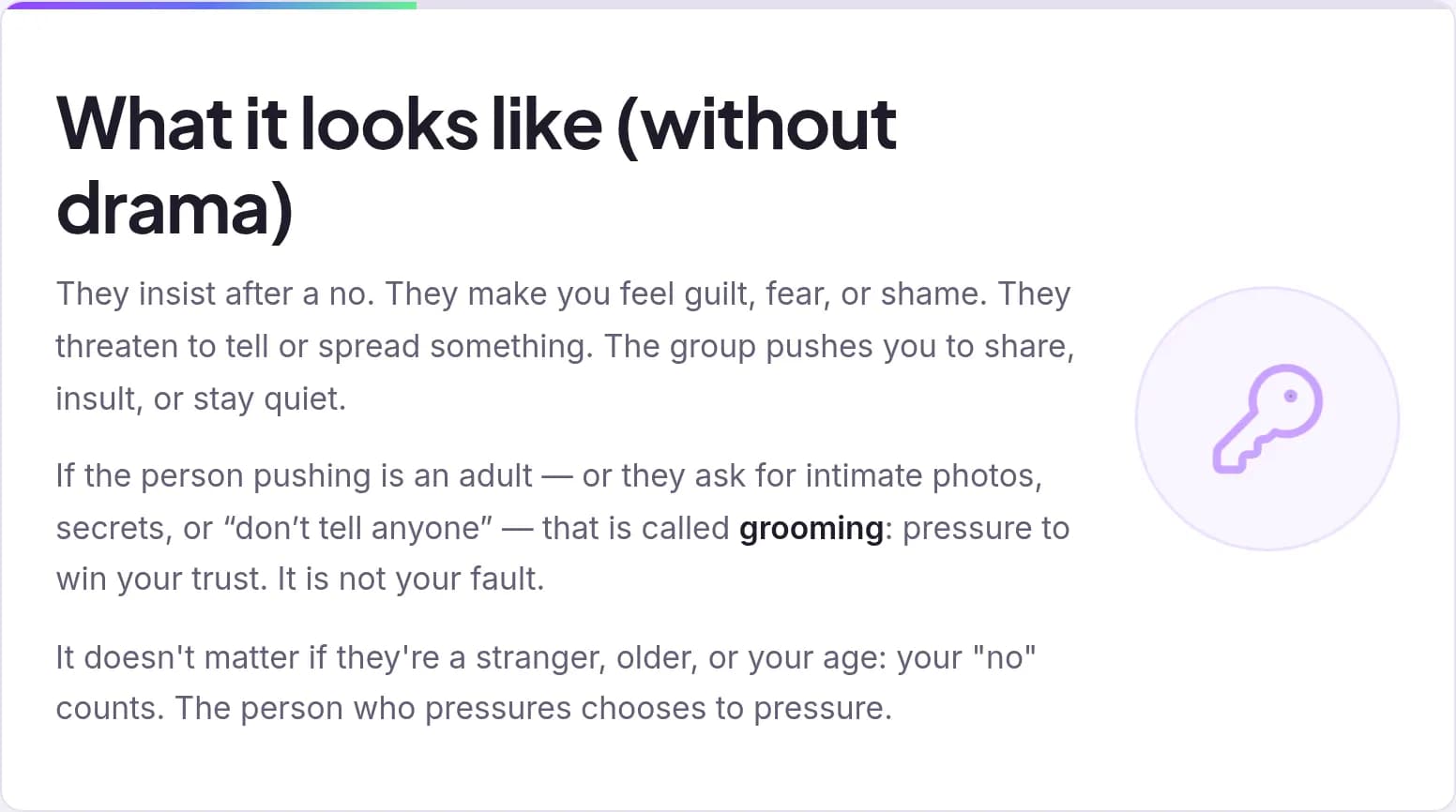
1 / 3
An AI-powered tutor also answers questions about the lesson at any hour.
04
What the school sees
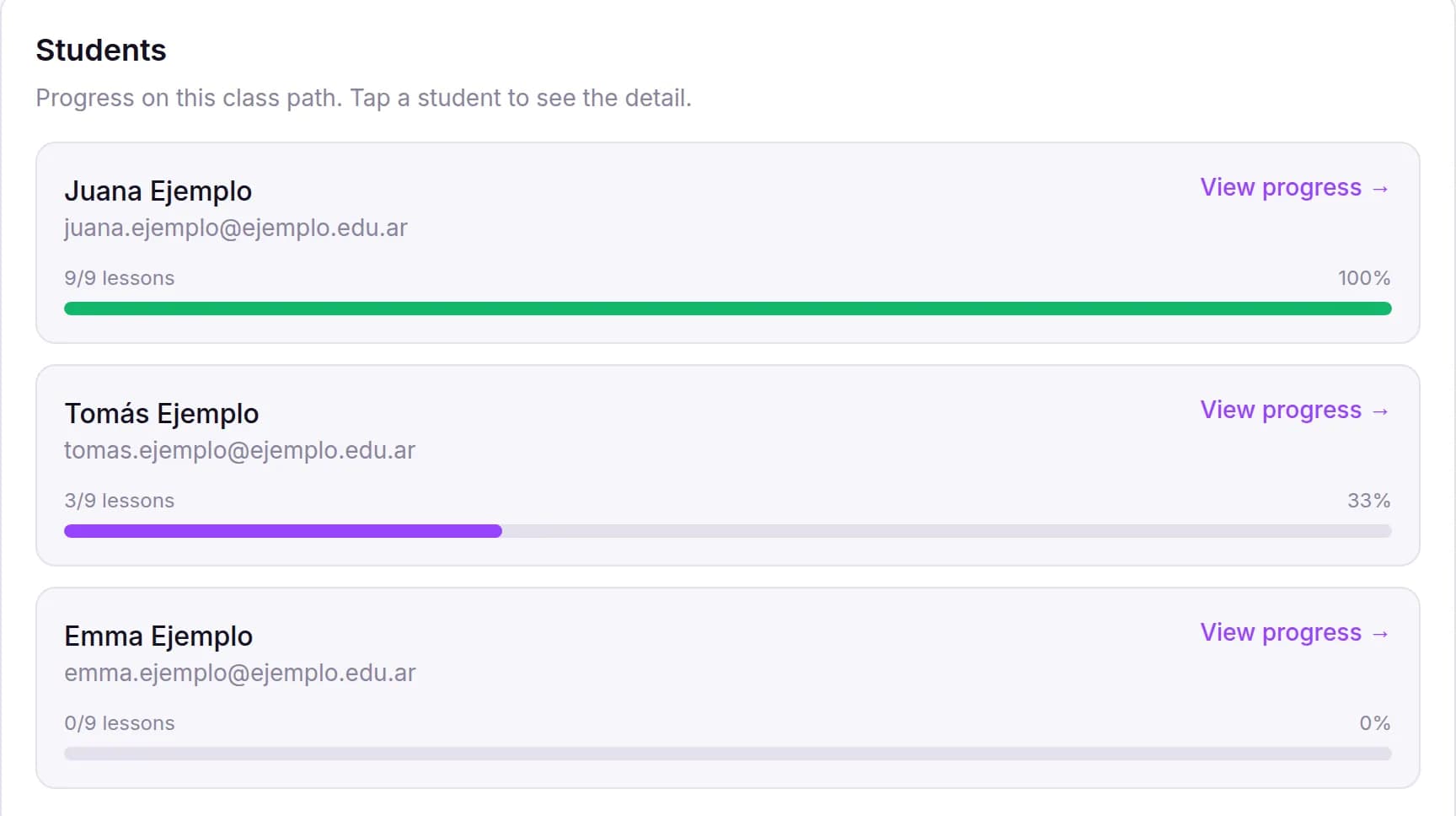
In each class you see who moved forward and who finished. A teacher sees their own class, not the whole school.
05
If something happens
The “Report grooming or bullying” button opens an internal school channel. Grooming goes only to school leadership. Bullying among students also reaches the teacher. Leadership works it with the gabinete psicopedagógico, the school’s counseling team.
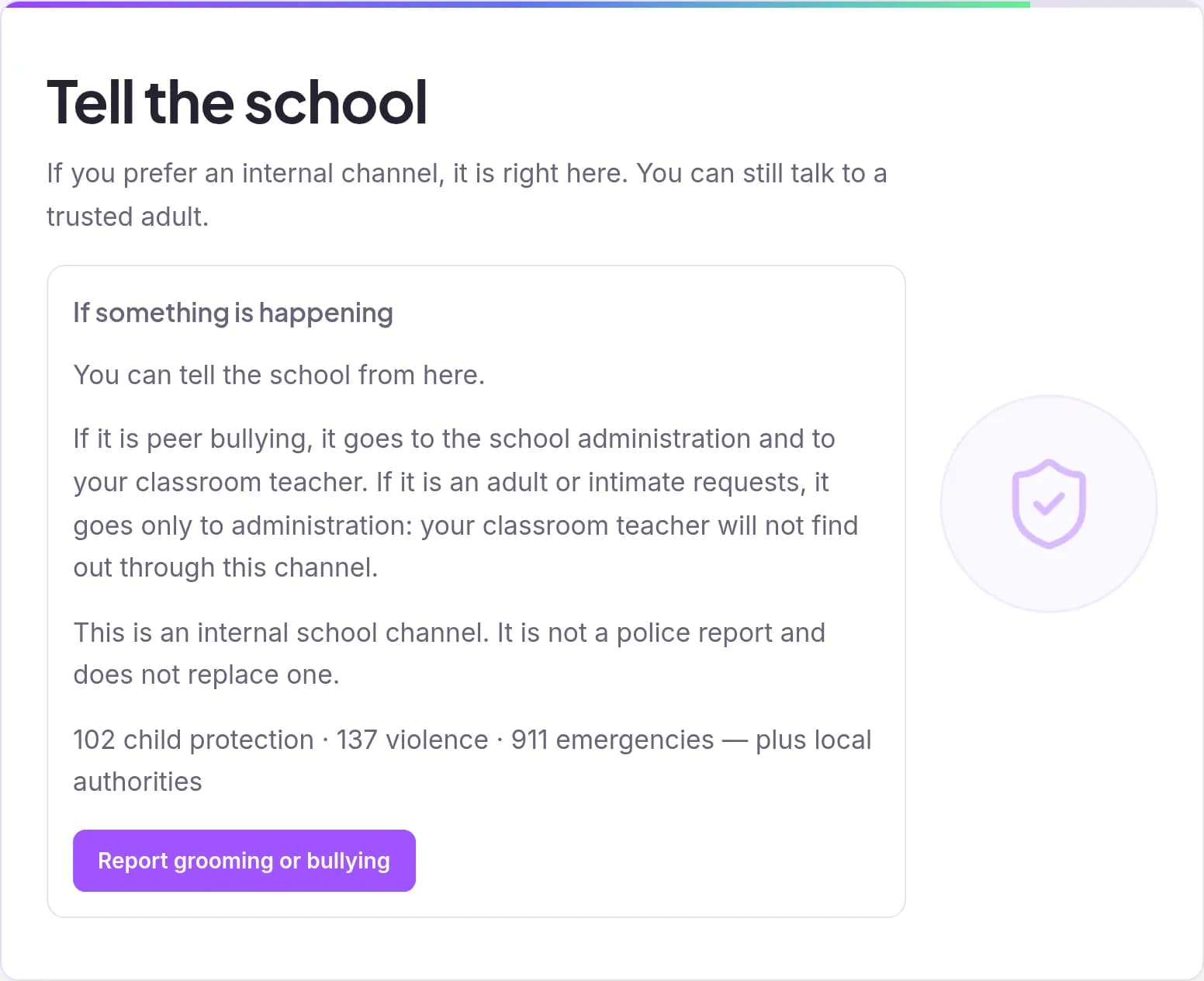
This channel does not replace a formal report to the police, a prosecutor, or a child-protection agency.
06
For families
Families learn how to support at home, not how to watch over every click.
- Short conversations, not lectures.
- What to do if a strange message or a scam shows up.
- How to line up with the school, without blame.
Request a pilot with a sample module
Leadership, one class, and families can walk through it before deciding. No commitment.
Request the pilot on WhatsAppDaniel Guignard · Fortr3ss · 351 768 3532